
If your company installs vegetative green roof systems, offering to maintain them and understanding which vegetation can allow a green roof system to thrive could open up new business opportunities. If a building owner is struggling with maintaining vegetation on a green roof system, providing this service can help distinguish you from other roofing companies and prevent clients from turning to general landscapers.
Over time, many Sedum-based extensive green roofs (defined by NRCA as shallow with growth media less than 6 inches of depth) experience a decline in vegetative coverage, especially ones without automated irrigation. This can happen for a variety of reasons including poor soil health; drought; wind scour; compaction from foot traffic; wildlife; excessive shade; and even intense, reflected light from nearby building windows.
Often, a problem is noticed well after damage is done, and remediation can be daunting. The typical response is to buy more Sedum plants to add to the assembly, which may not address underlying issues. A less expensive approach to bringing life back to a green roof is intentionally seeding plant species that can handle drought and poor soil health.
What follows are a dozen options, all of which play nicely with Sedum plants and can help build fertility in growing media. These plants all grow well in the Midwest and Northeast regions of the U.S. and some in the South and West. As with any green roof system, site conditions will dictate success. If existing plants are declining because the roof is too dry, watering the roof a bit can help get some of these species established from seed. A temporary hose-to-sprinkler connection with an inexpensive timer can be a valuable investment.
The nitrogen fixers
Purple Prairie Clover (Dalea purpurea) is a short-statured perennial legume that fixes atmospheric nitrogen by forming associations with soil microbes. Roots of the plant are colonized by Rhizobium bacteria, which produce enzymes that transform nitrogen gas into plant food. In exchange, the plant offers sugar and carbohydrates to feed the bacteria. When the Purple Prairie Clover drops its nitrogen-filled leaves in autumn, they will decompose into the growth medium and become available to neighboring plants. Many legume species, such as beans and peanuts, can fix nitrogen, but Purple Prairie Clover is perfect for green roof systems: It survives drought in shallow growth media depths, doesn’t get too tall, germinates without any pre-treatment and is attractive to pollinators, especially bees. Springtime seeding is best, and many seed companies will include a packet of Rhizobium inoculum to help get plants quickly established.
Alfalfa (Medicago sativa) also fixes nitrogen and grows relatively compactly. Although not quite as drought-tolerant as Purple Prairie Clover, it can thrive in extensive vegetative green roof assemblies. Alfalfa doesn’t seem to mind disturbed soils and can be a good choice for compacted areas. It is best to scatter seeds in spring. In late summer, Alfalfa can look a bit tattered; if it looks ugly, feel free to cut it down but leave the cut material on the roof to decompose. The plant will likely survive the cutback and may even push new foliage in response.
Partridge Pea (Chamaecrista fasciculata) is an annual legume that completes its life cycle in one growing season. It fixes nitrogen in association with Bradyrhizobia bacteria and various fungi. A host plant for several sulfur butterflies, it grows best in bare areas without much competition from other plants. An early-spring or autumn seeding will deliver best results though seedlings may not emerge until summer. Tolerant of dry soil and high heat, this species is recommended for vegetative assembly edges that are typically the hottest zones on a green roof.
Leadplant (Amorpha canescens) is more like a shrub than an herbaceous plant and would be a focal point in a Sedum planting. It has a robust root system that would probably be limited in many tray-based assemblies, so it is best used in a built-in-place system that allows the nitrogen-fixing roots to travel. This plant is slow to develop, often taking several years to reach flowering size. It is highly drought- and sun-tolerant once established, and the purple flowers show nicely against its silver foliage. Grasshoppers love to eat the leaves, so if there is a large grasshopper population on a green roof, establishment can be difficult.
Crimson Clover (Trifolium incarnatum) is often used as a cover crop in agriculture and can add a lot of nitrogen to green roof soils, too. Seed should be applied in spring or early autumn for best germination. Foliar growth is rapid and topped by handsome crimson flowers attractive to bees. Plants can be left in place to produce more seeds or cut down to prevent seeding. Redistribute any cut foliage in bare spots on the green roof to add nutrients where they may be most needed.
Increasing plant diversity will improve microbial diversity, making a green roof more resilient and wildlife-friendly
Quick cover
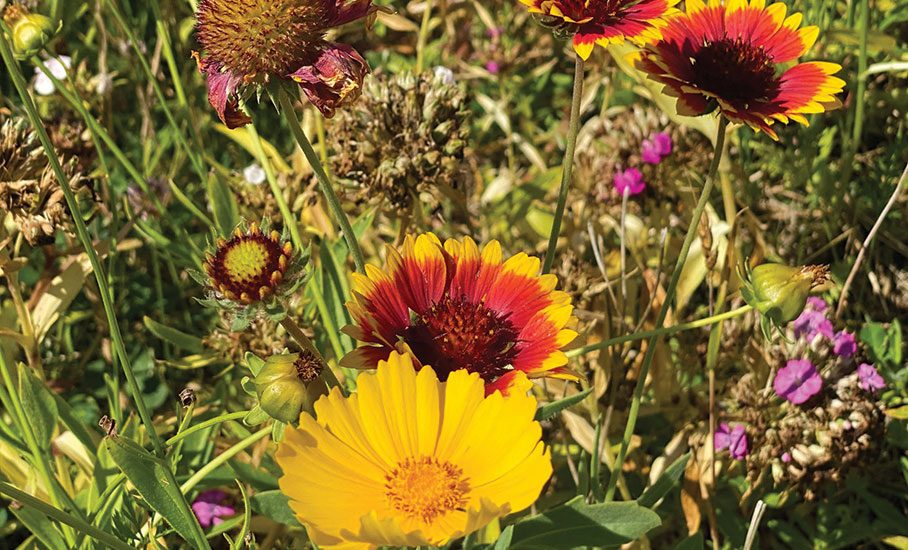
Indian Blanket (Gaillardia pulchella) is a quick-germinating annual that can handle drought and heat. It produces big two-toned flowers in the first season after seeding and reseeds readily with new plants often appearing in bare spots on a green roof. Most plants die after a season of growth—leave them in place so the roots and foliage can decompose and enrich the soil. This is another good choice for assembly edges.
Lance-leaved Coreopsis (Coreopsis lanceolata) is similar to Indian Blanket with its ability to bloom and produce seeds in year one. Unlike Indian Blanket, it is a perennial and can form colonies by spreading via underground rhizomes. It doesn’t compete well with larger prairie species, but on a Sedum-based green roof it can persist indefinitely, so if you are simply trying to improve the growth media and don’t want the look of tall plants hovering above Sedum plants, Indian Blanket may be a better choice. Both plants are highly attractive to pollinators and are commonly used as colonizing plants in prairie restorations.
Chia (Salvia hispanica) seeds, when hydrated, produce a gel that makes them useful as a short-term tackifier for wind-scoured areas on a green roof. Chia grows a bit tall, so a good strategy when planting it near Sedum plants is to scatter Chia seeds with those of another shorter species that can coexist with low-growing Sedum plants. Chia’s gels can hold the growth media together long enough for the partner plant to establish. Cut back the Chia as needed after it has done its job stabilizing the growth media.
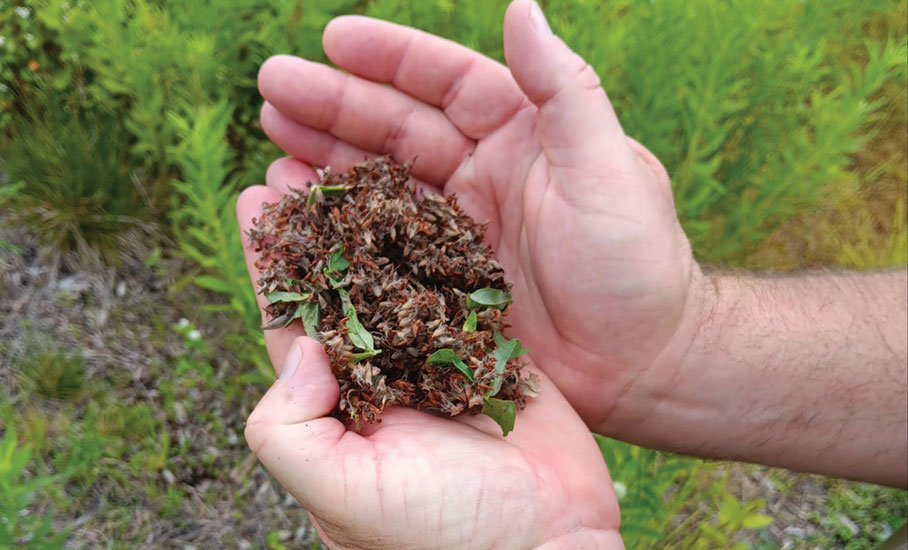
Buckwheat (Fagopyrum esculentum) is a non-native annual that grows best in moister soil, perfect for remediating a green roof with irrigation. It can survive in drier soils but will be stunted. Often used as a cover crop for scavenging nutrients and supporting pollinators, it blooms and produces seed just weeks after a late-spring seeding. Wait until the seed is developed and then redistribute on the green roof (or grind for pancakes). After harvesting, plants can be chopped down and dropped into the assembly for use as green manure.
Adaptable species
Black-eyed Susan (Rudbeckia hirta) grows in every state east of the Rockies (and most in the West). It is not finicky about soil type and thrives in full sun. Individual plants only live a year or two but bloom quickly after germination and produce seed the first season. Seeding is best done in autumn or winter as the seeds need about a month of chilling. This is a species that is probably growing in your neighborhood, and friendly neighbors might allow you to harvest some of their seeds for green roof biodiversity improvement efforts. Everybody likes Black-eyed Susans when they are flowering, so this is a good choice for a publicly visible green roof. Wildlife value is high for this species, feeding bees, butterflies and birds. Harvest seed and redistribute on the green roof—if they are left on the plant, Goldfinches might eat them before they drop.
Foxglove Beardtongue (Penstemon digitalis) is not quite as drought-tolerant as Black-eyed Susan, but it can thrive in shade or sun. This is a good choice for a shady Sedum-based green roof that has a slow decline in vigor. Plants form low-growing rosettes in the spring then send up spikes of nectar-filled white flowers that are favorites of bees. Flowering stalks can be ornamental, especially on red-foliaged cultivars like ‘Dark Towers’ or ‘Husker Red.’ Small seed capsules hold tightly on to tiny seeds until they open in autumn. If reseeding isn’t desired, stalks can be cut back after flowering, and the plant will use its energy to push more foliar growth at the base. A related species, Hairy Beardtongue (Penstemon hirsutus) has even more shade tolerance and is lower growing.
Chives (Allium schoenoprasum) are now commonly included in Sedum plant mats for green roofs. Unlike larger bulbs like tulips, Chives can survive winters in shallow depths of extensive green roofs. They also are easy to grow from seed if a green roof isn’t too dry and their low-growing stature pairs wonderfully with Sedum plants. The flowers are attractive to some bees, but if you really want to support pollinators, Nodding Onion (Allium cernuum) is a similarly sized native option. On a moist roof, both species can fill in Sedum plant gaps over time. Live bulbs can also be planted instead of seeds.
Bonus plants—weeds!
If a green roof has declining Sedum plants and lots of weeds, consider that some of the weed species may be beneficial for the soil’s health and for wildlife. A few species listed here have some aesthetic value and can thrive in extensive assemblies.
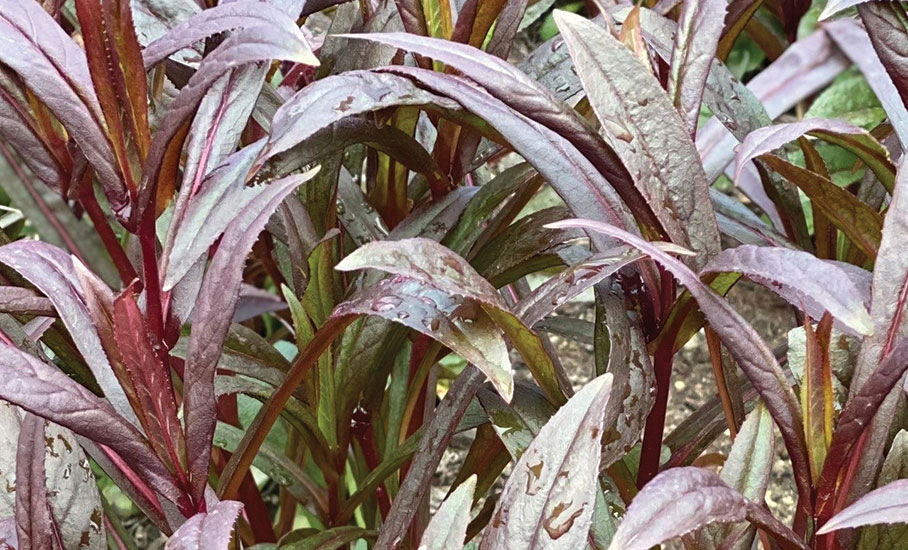
Toothed Spurge (Euphorbia dentata) is an annual weed that can become a nuisance in agricultural fields and can be found occasionally on green roofs. It’s not showy like its cousin Poinsettia, but it does have a red tinge on its foliage late in the season. This species thrives in poor soils and can revegetate barren areas on green roofs where nothing else seems to grow. If you find one growing in a problem area, leave it in place to reseed (though mourning doves may eat the seeds). It doesn’t compete with Sedum plants but rather offers some light shade, allowing existing Sedum plants to better cope with harsh conditions. A close relative, Fire-on-the-Mountain (Euphorbia cyathospora) has bright-red bracts when flowering and is available from a few seed vendors. Both are tough plants for difficult spots.
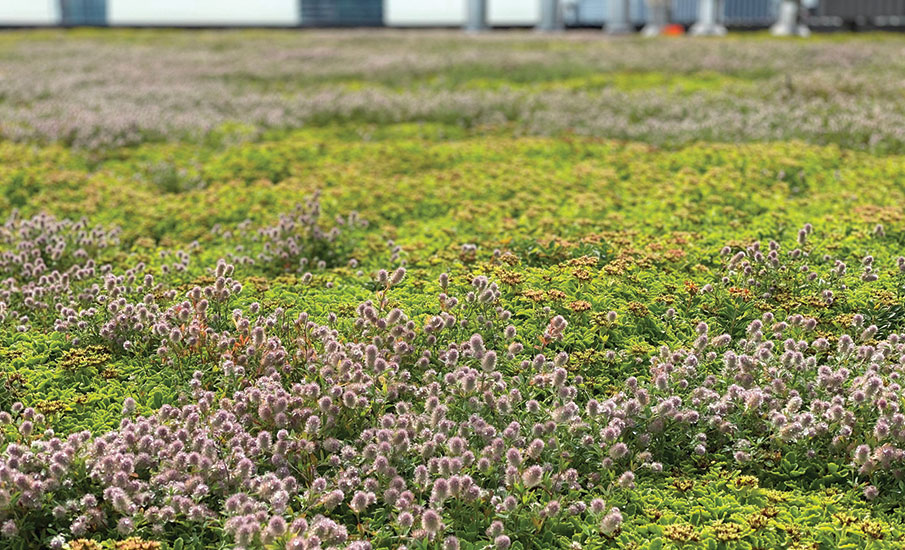
Rabbit-foot Clover (Trifolium arvense) is a nitrogen-fixing weed from Eurasia that often can be found growing within Sedum plantings. Short-statured, the attractive pink flowers poke up just above surrounding Sedum plants. Resist the urge to pull this species as it is helping feed its neighbors. Despite its invasive tendencies, it has not become a problem in natural areas as many mammals eat the foliage. On green roofs, it can be considered a helper plant that will decrease the need for synthetic fertilizers. Although it coexists nicely with Sedum plants, it will get outcompeted by larger plants in a meadow-type assembly. Seeds can be harvested and redistributed from existing plants or purchased from online suppliers.
Birdfoot Violet (Viola pedata) is no shrinking violet, growing best in dry soils. It occasionally appears on extensive green roofs, likely brought in inadvertently by birds. Native to most states in the eastern half of the U.S., it has high wildlife value: Bees love the bright blue flowers, and various butterfly species use it as a host plant. Birdfoot Violet grows well with Sedum plants, filling in small gaps between plants, and it is barely noticeable except when flowering. A few specialty nurseries sell seeds of this perennial species, which should be scattered in autumn.
Common Purslane (Portulaca oleracea) occurs on many extensive green roofs and can be quite difficult to eradicate because it has a taproot that often breaks off when tugged and seeds that can remain viable for decades (if you’ve ever tried to pull Purslane out of sidewalk cracks, you know the struggle). This annual plant hugs the ground and does not tolerate shade. Rather than spending valuable labor hours weeding this plant, it may be better to leave it be, protecting bare soil from desiccation with its succulent foliage. If existing Sedum plants are not vigorous enough to outcompete it, consider overseeding Purslane with another appropriate species.
Keep them growing
Whatever the type of growth medium used on a green roof, if there are plants growing, it indicates at least a modicum of healthy microbial presence. Disturbance to the growth medium can damage the underlying biology, so avoid disruptive weeding that churns over the soil. Increasing plant diversity will improve microbial diversity, making a green roof more resilient and wildlife-friendly and may reverse seemingly inevitable decline. Seeding appropriate species might be the most effective and inexpensive option for green roof system remediation.
Photos courtesy of Omni Ecosystems, Chicago.

MICHAEL BUKKA DAVENPORT
Director of technical guidance
Omni Ecosystems, Chicago