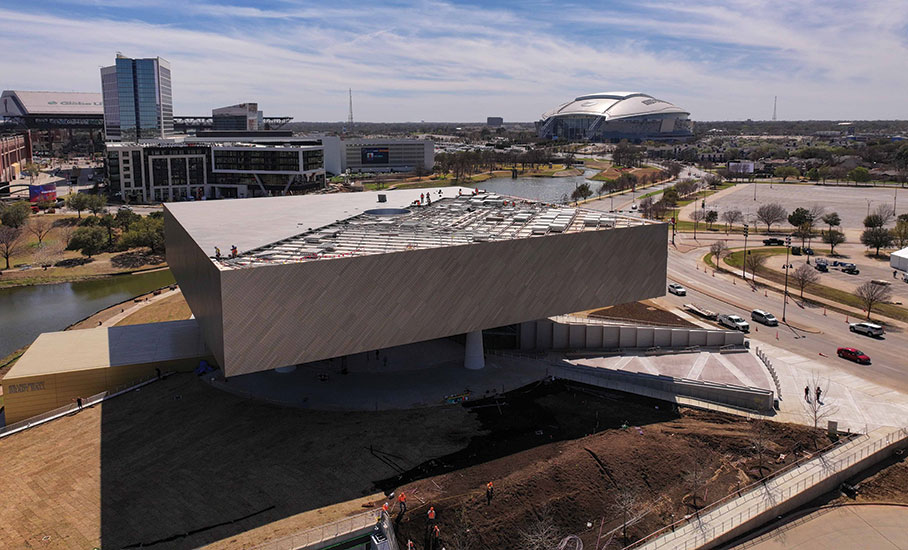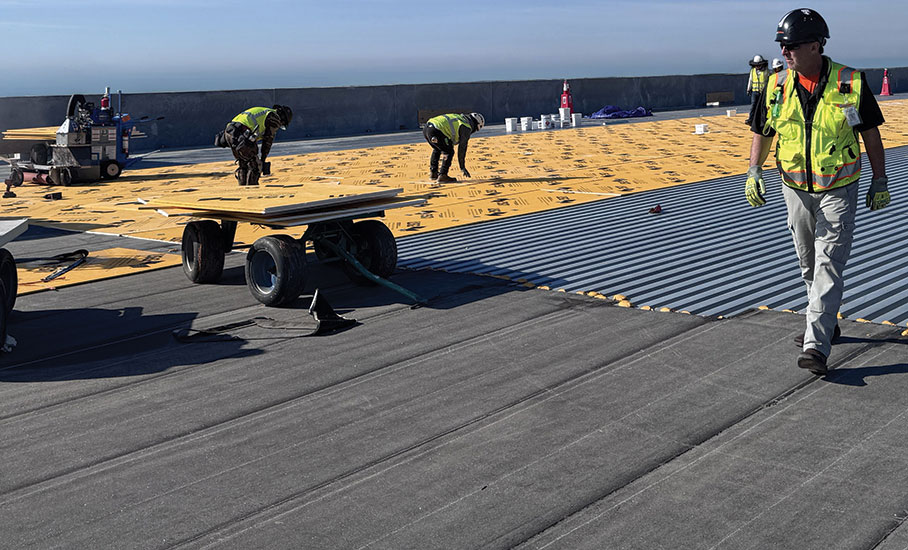
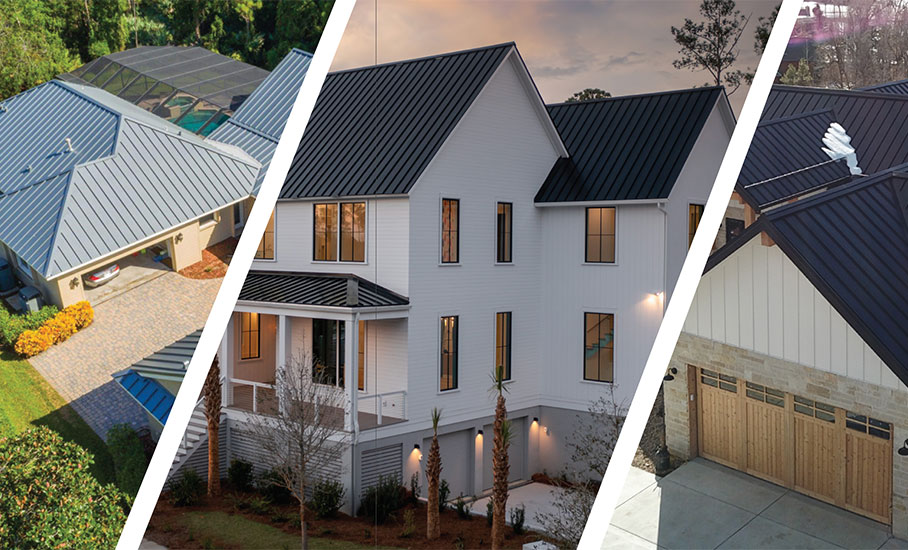
A roof has traditionally had one job above all else: protect the home or building and its occupants beneath it from the elements. But home and building owners are increasingly expecting more. They want roofs that can withstand increasingly severe and frequent weather events, maintain their appearance for decades with minimal maintenance and deliver lasting value on their investment.
That puts responsibility with roofing contractors to carefully assess each project’s climate, maintenance requirements and the owner’s budget and performance expectations when recommending roofing materials. In many instances, that process also includes considering the building’s exposure to high winds, hail, heavy rain, snow or wildfire, as well as applicable building code requirements. Taking all these factors into account helps contractors recommend roof systems that deliver reliable, long-term performance.
Among current roofing materials, metal is one material that stands out for its ability to perform in a wide range of climates and applications. Whether a project is located on a hurricane-prone coastline, in a wildfire-prone state or in a region that experiences heavy snow loads, contractors can specify metal roof systems designed to meet the unique demands of those environments.
Understanding how metal roofing performs under specific conditions allows contractors to make more informed recommendations, reduce callbacks and deliver long-term value to their customers. As demand continues to grow for resilient, low-maintenance roof systems, that expertise can also help contractors differentiate their businesses in an increasingly competitive market.
The standard for storm resistance
Although some roofing materials perform well against certain types of weather events, few provide comprehensive protection against a broad range of extreme conditions. Metal roofing panels are one of the few that can.
In fact, some metal roof systems can provide wind resistance up to 120 mph, which defends hurricane-force winds. These systems are certified to wind-resistance testing standards such as UL 580, “Standard for Safety Tests for Uplift Resistance of Roof Assemblies”; TAS 125, “Standard Requirements for Metal Roofing Systems”; UL 1897, “Standard for Safety, Uplift Tests for Roof Covering Systems”; ASTM E1592, “Uniform Static Pressure Uplift”; and ASTM E1680, “Air Infiltration Test for Exterior Metal Roof Panel Systems.”
It is important to note these test standards focus on the different strains high winds exert on a roof, and their combination provides a more complete picture of how a roof will perform during the chaotic pressures and forces winds can cause.
High-force wind is often accompanied by rain and other types of precipitation. This makes guarding against water penetration under static and dynamic pressure conditions essential to ensuring a weather-resilient home or building. By resisting water infiltration, roofs can help minimize the risk of moisture-induced corrosion of structural and nonstructural elements.
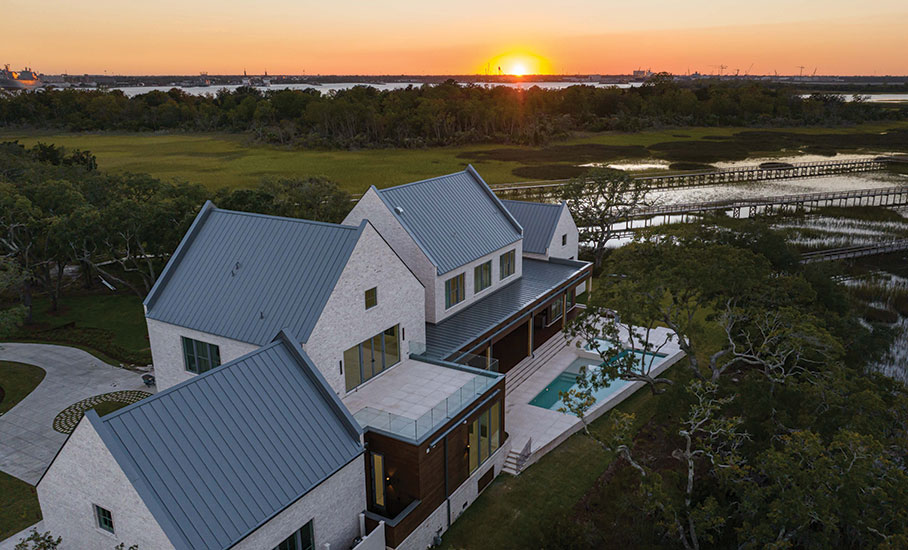
Select metal roof systems are certified to TAS 100, “Standard Test Method for Wind and Wind Driven Rain Resistance of Discontinuous Roof Systems,” ASTM E1646, “Standard Test Method for Water Penetration of Exterior Metal Roof Panel Systems by Uniform Static Air Pressure Difference,” and ASTM 2140, “Standard Test Method for Water Penetration of Metal Roof Panel Systems by Static Water Pressure Head” standards. In combination, these standards demonstrate how a metal roof can provide a substantial barrier to water intrusion under several pressure conditions to reduce the damage water can cause to insulation, sheathing, structural members and electrical systems.
Rain is not the only type of precipitation a home or building may face. Hailstorms can cause significant damage. However, at their core, metal roof systems provide a durable substrate that can withstand impact damage from hail and falling tree limbs, achieving ASTM E1886, “Standard Test Method for Performance of Exterior Windows, Curtain Walls, Doors, and Impact Protective Systems Impacted by Missile(s) and Exposed to Cyclic Pressure Differentials,” and UL 2218, “Impact Resistance of Prepared Roof Covering Materials,” which is the highest rating for roofing materials. Both standards demonstrate metal roofing can stay strong against hail and other impact damage.
As indicated by the many certifications metal roofs can achieve, these systems offer a well-rounded defense against the elements. Although their weather resilience makes them a powerful addition to a project regardless of location, premium metal roofs have received approvals from the Florida Building Code and the Texas Department of Insurance and have been approved for use in Miami-Dade County and other High Velocity Hurricane Zones.
Defense against wildfires
Weather resistance delivers significant value, but for many parts of the U.S., defense against wildfires can be another key consideration. Although California’s Palisades Fire made headlines in 2025 for its wide path of destruction throughout Los Angeles County, the threat of damage from wildfires radiates through the western U.S., extending north and south to the Canadian and Mexican borders and east to Colorado’s eastern edge. The danger wildfires pose stretches beyond buildings at the edge of the flames.
Burning debris, embers and other firebrands can float for miles on updrafts and wind currents before landing on a building and igniting. As such, roofs can play an integral role in protecting homes, businesses and other buildings from wildfire damage up close and afar.
In this role, metal roofs provide compelling benefits. First and most directly, these systems come with a Class A material rating as determined by UL 790, “Test Methods for Fire Tests of Roof Coverings,” which is identical to ASTM E108, “Standard Test Methods for Fire Tests of Roof Coverings.” This test determines how well a material can resist fire damage and ignition from sources originating from outside a building. Class A is the highest rating a roofing product can achieve. Class A-rated materials significantly reduce damage and the risk of flames spreading.
Metal roofs also have a smooth, nonporous surface that allows leaves, twigs and other flammable debris to slide off more easily than other roofing materials. This can help mitigate the buildup of fuel for flying embers to ignite and minimize maintenance requirements for end-users. Also, many metal panel profiles reduce the number of crevices where debris can accumulate, further shrinking the amount of fuel available for burning debris.
Their Class A rating and ability to easily shed debris work together to defend against wildfires and associated risks. As a result, metal roofs can be indispensable in wildfire-prone areas—for the homes and buildings they cover as well as community resilience.
A Boulder, Colo., family home with a new metal roof demonstrated this when in late 2021, a devastating wildfire prompted the evacuation of 35,000 people. Fueled by a dry season and 100-mph winds that fanned the fire’s flames and intensified the heat, the fire was nearly impossible to contain. As the fire crept through the neighborhood, it caused a large propane tank near the home to explode, showering the roof and surrounding area with flames, ash and destructive shrapnel. Despite the destructive nature of the fire and the propane tank explosion, the metal roof, paired with the home’s noncombustible metal and stone siding, resisted damage, and the home remained standing.
Resistance to UV exposure
Storms and wildfires often dominate conversations about the destructive forces that can damage a roof—and for good reason. Protecting occupants from extreme storms and fire can be a matter of life or death. But another threat works more slowly: years of constant ultraviolet exposure.
Whether steep- or low-sloped, roofs bear the brunt of the sun. UV radiation is especially intense in the Southwest and high-altitude Mountain West, where prolonged exposure can accelerate the aging of roofing materials.
One of the most visible signs of UV-related degradation is chalking, which is a white, powdery residue that can form on a roof’s surface. Chalking occurs when UV rays gradually break down the resins in a roof’s protective coating. As the resins deteriorate, they no longer can effectively bind and protect the coating’s pigments. Over time, the loss of this protective layer can leave the metal substrate more vulnerable to the elements.
Fortunately, advances in pre-applied coatings have significantly improved metal roofing’s resistance to long-term UV exposure. Some metal roofing manufacturers will use a polyvinylidene fluoride coating formulated with a Kynar® resin. Unlike lower-performance coatings, this premium PVDF system suspends pigments within a highly durable resin that resists UV degradation, allowing the roof to maintain its original color and protective finish for decades.
For projects located in sunny, high-heat climates, selecting a metal roof with a high-performance coating can be just as important as selecting the right panel profile. Contractors who understand the role these premium PVDF coatings play can help home and building owners invest in a roof system that continues to perform well and maintain its beautiful appearance over its service life.
Style considerations
Metal roof systems can significantly contribute to a home’s or building’s ability to stand resilient against acts of nature. They can also support a wide range of design aesthetics without complicating and potentially delaying construction.
Metal roofing substrates can be formed into several profiles. These profiles can range from options with exposed fastener systems to mechanically seamed profiles with concealed fasteners and more. Each profile type has several options within it, and each of those options can be formed into variable widths. This alone allows project teams to find the right balance of profile and panel width for a project while maintaining the original design intent.
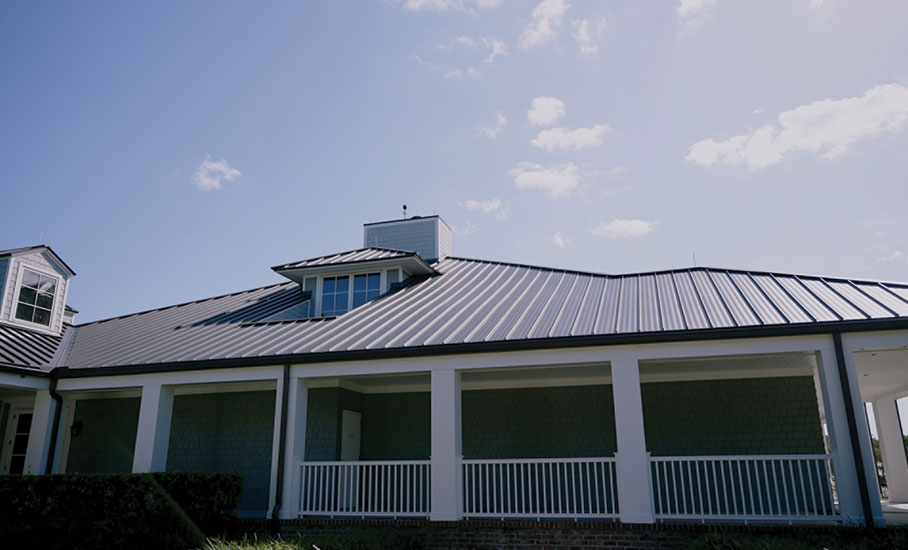
A landmark property in hurricane-prone St. Petersburg, Fla., for example, was able to use a 1½-inch snap-lock profile to create a durable roof that preserved the historical feel of the residence. Likewise, a hotel in Ship Bottom, N.J., used a 1¾-inch snap-lock profile with a broad seam width. This profile is able to withstand the high design pressures of a coastal project and mimics historical nautical architecture with its panel design and color, a Kynar finish in Deep Blue Sea.
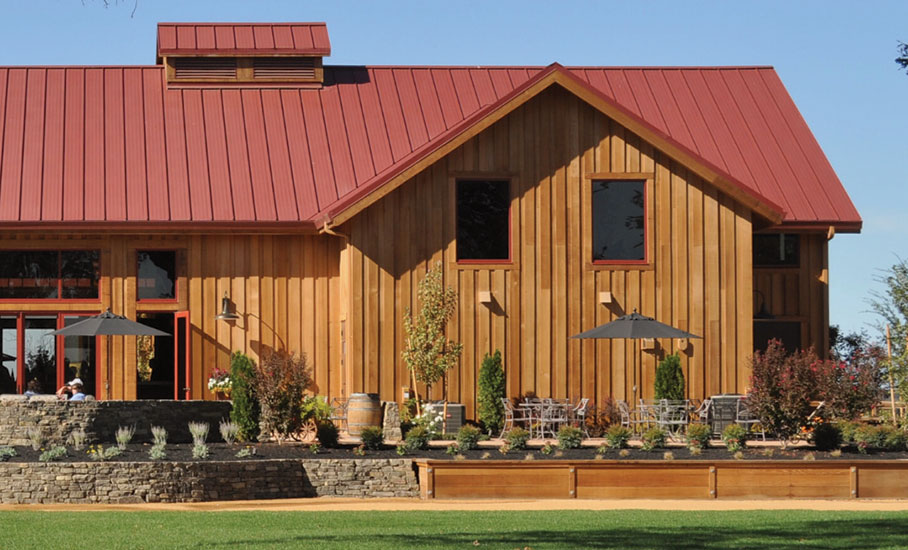
Metal roofs are available in more than 50 colors, including woodgrain-inspired patterns and metallics. This can help teams nudge a metal roof into the particular aesthetic a project deserves, whether a barn house red for board and batten-style projects or a brilliant copper for an Art Deco look.
But these colors do more than contribute to a home’s or building’s overall aesthetic. They can be instrumental in supporting sustainable construction practices by reflecting and re-emitting solar radiation by up to 90%. Known as “cool” roof colors, these options have a third-party-certified solar reflection index and support efficient operation and may even help mitigate the urban heat island effect, according to the Cool Roof Rating Council.
Among current roofing materials, metal is one material that stands out for its ability to perform in a wide range of climates and applications
Added benefits
The ability for metal roofs to contribute to a sustainable building practice goes beyond cool roof colors. The material content and end of life protocols, system design and more can all contribute to buildings that operate more efficiently in the long term.
In terms of materials, metal roofs contain up to 60% recycled material and can be 100% recyclable at the end of their service lives. By contributing to a circular economy and increasing the transparency about supply chains, these roof systems can contribute to credits toward several green building rating systems such as LEED, the Living Building Challenge and similar life-cycle assessment-based certification frameworks while also playing a crucial role in helping reduce the billions of pounds of roofing waste generated in the U.S. each year, as reported by the Environmental Protection Agency. The waste reduction is further compounded by metal roofs’ 40- to 60-year lifespans.
A roof that needs to be replaced less often means a greener project overall because less energy is spent and carbon is wasted on replacement materials and disposal of old roofing debris.
In terms of design, metal roofing panels can incorporate rigid roofing insulation to improve a building’s thermal performance. Given about 25% of a building’s heat loss occurs through the roof, a well-insulated system can support not only a more sustainable occupancy phase but also lower building operating costs in the long term by reducing the energy needed to keep an interior comfortable.
Metal roofs are also compatible with solar panels. Most panelized metal roofs allow the panels to be installed without penetrating the roof deck as they can simply clip into the standing seam, reducing the risk of leakage and creating zero damage to the roof itself. Along with the durability and long service lives of metal roofs, this minimizes the need for repair and reinstallation, which lowers the total cost of ownership for the end-user.
Although the decisions about a project’s sustainability goals ultimately rest with the owner and design teams, these goals are increasingly becoming the standard for new buildings and retrofits. Roofing contractors who can install metal roof systems may be better positioned to handle future project demands than those who cannot.
Installation efficiencies
The performance of any roof system depends on more than the material alone. Even the most weather-resistant roof panel must be installed correctly to deliver the wind, water, hail and fire performance it was designed to provide. Fortunately, metal roof systems offer advantages that help contractors achieve installation efficiencies and long-term quality.
For instance, metal panels can be delivered to a job site fully formed or fabricated on-site by coil contractors. This flexibility can simplify logistics, reduce site congestion and help crews adapt to changing project schedules. Contractors who have invested in portable roll-forming equipment can order coils directly from certified dealers, fabricate panels to the exact dimensions required and minimize material waste while streamlining installation.
As with any roofing material, metal has a few quirky but natural behaviors contractors should understand, including the oil-canning phenomenon and the occasional “popping” or creaking that can happen during thermal expansion and contraction. Proper material selection and installation practices, such as leveraging heavier gauges, rib options, narrower panel widths, careful color selection, working on smooth deck surfaces and avoiding over-tightening fasteners can help minimize these potential issues. Ultimately, understanding and accommodating the natural movement of metal panels can help ensure a successful installation and long-term roof performance.
Looking ahead
As weather events become more frequent and severe across many parts of the U.S., roofing contractors are increasingly being asked to recommend systems that deliver reliable, long-term protection across a wide range of environmental conditions. From hurricane-force winds and hailstorms to wildfires, prolonged UV exposure and decades of everyday weathering, metal roof systems provide a level of all-around resilience few roofing materials can match.
Contractors who understand these performance characteristics are better equipped to recommend the right roof for each project, reduce callbacks and deliver the lasting value home and building owners expect today.
Photos courtesy of Drexel Metals, Carlisle, Pa.

MIKE WEIS
Vice president of sales
Carlisle Architectural Metals, Waukesha, Wis.